 Image 1 of 1
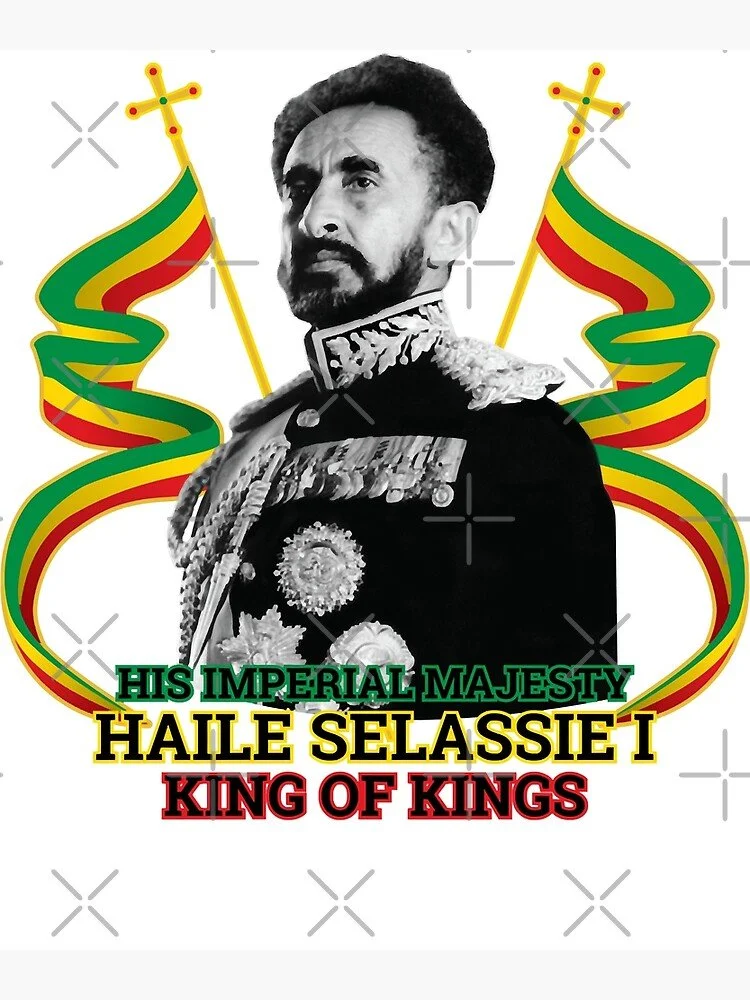
Born Tafari Makonnen in 1892, Haile Selassie I rose from noble beginnings to become one of the most influential and controversial leaders of the twentieth century. Regent of Ethiopia from 1916 and crowned Emperor in 1930, he traced his lineage to the ancient Solomonic dynasty—traditionally linked to King Solomon and the Queen of Sheba—and carried the title “King of Kings, Conquering Lion of the Tribe of Judah.”
A central figure in African and world history, Haile Selassie modernized Ethiopia, secured its membership in the League of Nations and later the United Nations, and introduced the nation’s first written constitution. His dramatic 1936 speech before the League of Nations condemning Italy’s invasion and use of chemical weapons made him a global symbol of resistance to fascism. After years in exile during World War II, he returned triumphantly to Addis Ababa in 1941 and continued efforts to reform and centralize the Ethiopian state.
Revered by the Rastafari movement as a messianic figure and remembered as a founding force behind African unity, Haile Selassie’s life remains a powerful story of leadership, faith, diplomacy, and enduring legacy.
Born Tafari Makonnen in 1892, Haile Selassie I rose from noble beginnings to become one of the most influential and controversial leaders of the twentieth century. Regent of Ethiopia from 1916 and crowned Emperor in 1930, he traced his lineage to the ancient Solomonic dynasty—traditionally linked to King Solomon and the Queen of Sheba—and carried the title “King of Kings, Conquering Lion of the Tribe of Judah.”
A central figure in African and world history, Haile Selassie modernized Ethiopia, secured its membership in the League of Nations and later the United Nations, and introduced the nation’s first written constitution. His dramatic 1936 speech before the League of Nations condemning Italy’s invasion and use of chemical weapons made him a global symbol of resistance to fascism. After years in exile during World War II, he returned triumphantly to Addis Ababa in 1941 and continued efforts to reform and centralize the Ethiopian state.
Revered by the Rastafari movement as a messianic figure and remembered as a founding force behind African unity, Haile Selassie’s life remains a powerful story of leadership, faith, diplomacy, and enduring legacy.